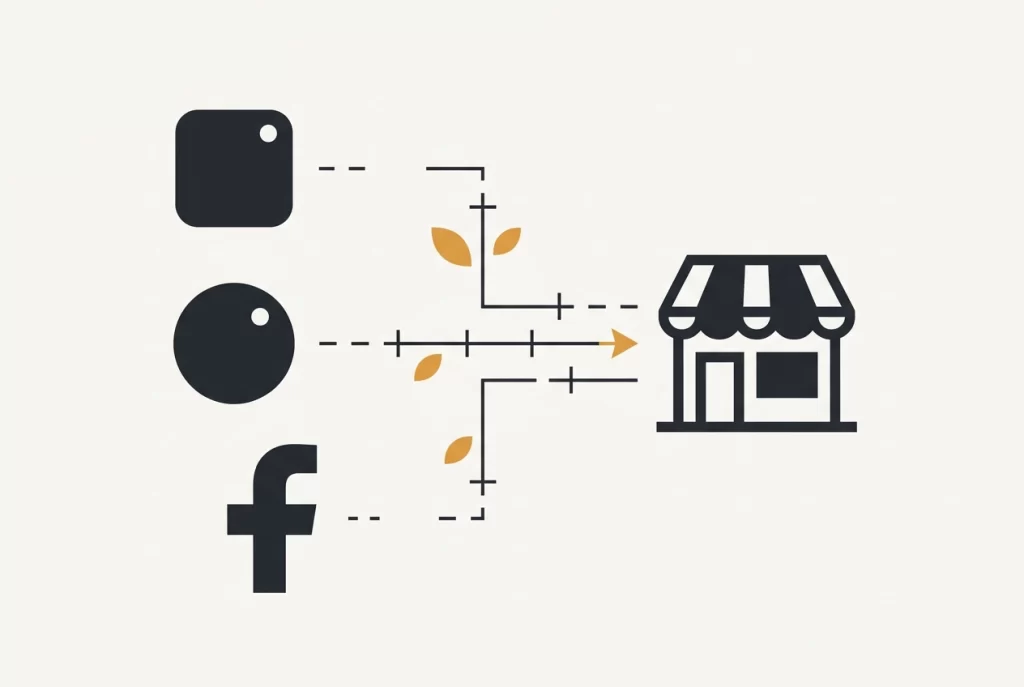
Someone told you that you need to be on every social media platform. Post on Facebook. Then Instagram. Don’t forget TikTok. Oh, and LinkedIn too. Sound familiar? If you’ve been trying to keep up with all of them while also, you know, actually running your business, you’re probably exhausted and wondering if any of it is even worth it.
Here’s the thing: for most local Australian businesses, trying to be everywhere is one of the biggest time-wasters going. Effective social media marketing for small business isn’t about doing everything. It’s about doing the right things in the right places.
In this post, we’re cutting through the noise with a practical, no-fluff look at where Australian audiences actually spend their time online and which platforms genuinely move the needle for bricks-and-mortar and service-area businesses like yours. We’ll compare Facebook, Instagram, TikTok, and LinkedIn side by side, match each one to specific business types, and show you what a realistic content schedule actually looks like without a big agency budget. By the end, you’ll know exactly where to focus first and what you can safely ignore.
The ‘Be Everywhere’ Myth That’s Wasting Your Time
Somewhere along the way, small business owners got sold a very bad idea: that you need to be on every social platform, posting constantly, to stay relevant. Facebook, Instagram, TikTok, LinkedIn, maybe Threads for good measure. The advice sounds thorough. In practice, it’s exhausting and ineffective.
Spreading yourself across five platforms doesn’t multiply your results. It dilutes them. You end up with five half-maintained profiles that all look a bit abandoned, instead of one or two that actually build trust with real customers.
The 2025 ACCI Small Business Conditions Report.pdf) found that nearly a third of Australian small business owners have considered closing their doors, with rising costs and admin load eating into every available hour. Social media marketing for small business shouldn’t add to that pressure.
The real goal isn’t maximum platform coverage. It’s visibility with the right people in your local area.
This piece skips the vague advice and makes a direct call: here are the platforms actually worth your energy in 2026, matched to your specific type of business.
Where Australians Actually Spend Their Time Online
So before we decide where to focus, it helps to know where Australians are actually hanging out online.
Australia punches well above its weight for social media usage, with the vast majority of adults active on at least one platform. That gives local businesses a genuine opportunity, but only if they’re on the right platform for their audience.
Here’s the quick lay of the land:
- Facebook remains the most-used platform by total active Australian users, particularly in the 30-65 age bracket. That’s the cohort making most of the local buying decisions, whether it’s booking a tradie, choosing a restaurant, or finding a local service.
- Instagram skews younger and more metro, with strong engagement in lifestyle, food, beauty, and home categories. It rewards visual businesses.
- TikTok has grown fast among Australians under 35, but how people discover businesses there is quite different from Facebook or Instagram. High views don’t always translate to local enquiries.
- LinkedIn operates in its own world. It’s useful for B2B and professional services, but largely irrelevant for consumer-facing, bricks-and-mortar businesses.
The platform with the most users isn’t automatically the right one for your business. What matters is where your specific customers are spending their time.
Facebook: Still the Workhorse for Most Local Australian Businesses
So where does that leave Facebook? Still standing, as it turns out.
Reports of Facebook’s death have been greatly exaggerated. It remains the strongest organic platform for local small business social media marketing in Australia, particularly for the 30-65 age bracket that actually makes most local buying decisions.
Why Facebook works where others don’t:
- Local Groups drive real referrals. When a Penrith homeowner asks their suburb’s Facebook group for a reliable electrician and your name comes up, that recommendation converts. That kind of word-of-mouth doesn’t happen on LinkedIn or TikTok.
- Your Business Page shows up in Google. Consistent posting gives you a secondary presence in search results alongside your website, a quiet but genuine SEO bonus.
- Paid ads stay affordable. Even $10-$20 per day can generate real enquiries for a service-area business when the targeting is local and specific.
Best fit for: tradies, plumbers, electricians, landscapers, cafes, local retail, mechanics, and allied health providers.
Realistic commitment: three posts per week, mixing before/after photos, community moments, and service reminders. That’s roughly 30-40 minutes weekly if you batch it, and it’s enough to stay visible and relevant.
Instagram: Worth It If Your Work Looks Good on Camera
Facebook suits plenty of businesses well, but if what you do looks good, Instagram deserves a serious look.
Instagram rewards visuals above everything else. If your product, space, or finished work is photogenic, the platform can drive genuine organic discovery from people who’ve never heard of you.
Best fit for: cafes and restaurants, hair and beauty salons, interior designers, florists, fashion and homewares retail, fitness studios, and wedding or events businesses.
Less suited to: bookkeepers, IT support, insurance brokers, and other service businesses where the work itself isn’t visually distinct. A spreadsheet doesn’t photograph well, and that’s okay.
Reels Are Now the Priority Format
Short video (Reels) gets significantly more reach than static image posts. Research shows Reels reach over 100% more users than standard photo posts and generate around 67% higher engagement. If you can film a quick before-and-after, a process clip, or a behind-the-scenes moment regularly, you have a real advantage.
Aim for 4 to 5 posts per week, mixing Reels with static images. Posting less often leads to noticeable reach decline.
The Meta Efficiency Bonus
Because Instagram and Facebook are both owned by Meta, managing them together is straightforward. One ad campaign can run across both platforms simultaneously, which saves meaningful time for small business social media marketing on a tight schedule.
TikTok: Big Reach, But Is It Right for Your Business?
TikTok’s organic reach is genuinely in a league of its own. A brand-new account with zero followers can post a single video and reach tens of thousands of people overnight. No other platform comes close to that right now.
The catch is that TikTok doesn’t reward occasional posting. It rewards consistency, personality, and entertainment. That’s a meaningfully different ask than a Facebook update or an Instagram photo.
Best fit for TikTok:
- Cake decorators, custom furniture makers, tattoo artists
- Charismatic café or restaurant owners
- Any business where the process or finished product is genuinely satisfying to watch
Poor fit:
- Tradies, accountants, IT support, or anyone who’d rather not be on camera
- Businesses that can’t commit to regular short-form video production
There’s also a demographic reality worth knowing: Australian TikTok users skew heavily under 35. If your customers are mostly in the 40-plus bracket, strong view counts won’t necessarily translate into real enquiries or bookings.
The honest take? TikTok is a bonus channel, not a foundation. If Facebook or Instagram isn’t working yet for your business, adding TikTok to the mix won’t fix that. Get one platform running consistently first, then consider whether TikTok suits your style and your audience.
LinkedIn: Ignore It Unless You Sell to Other Businesses
LinkedIn is a different beast entirely. While TikTok is about entertainment and reach, LinkedIn is purely professional networking territory, and that changes everything about who’s actually there.
Nobody opens LinkedIn to find a local café for brunch or search for a plumber after a burst pipe. They’re there for business. That makes it largely useless for consumer-facing local businesses, but genuinely valuable for the right ones.
LinkedIn is worth your time if your customers are other businesses. Accountants, bookkeepers, HR consultants, IT managed service providers, commercial cleaners servicing offices, business coaches, and recruiters all have a real reason to be active here. Decision-makers at companies use LinkedIn regularly, and a consistent presence builds the kind of familiarity that turns into referrals and warm leads over time.
For B2B small businesses, 2-3 posts per week is a realistic and effective commitment. Share a practical insight, a client win (with permission), or a behind-the-scenes look at how you work. Keep it professional but human.
If you run a consumer-facing business, skip LinkedIn without guilt. Your time genuinely is better spent on Facebook or Instagram.
One exception worth noting: if you’re actively hiring, LinkedIn is useful regardless of your business type. It’s still the go-to platform for recruitment, even for small local operators.
Quick Guide: Which Platform Fits Your Type of Business
So where does your business actually fit? Here’s the short version.
Tradies and home services (plumbers, electricians, landscapers, cleaners): Facebook is your platform. That’s where your customers are, and local community groups drive real referrals. Skip TikTok and LinkedIn entirely.
Cafes, restaurants, and food businesses: Run Facebook and Instagram together. Food is naturally photogenic, and both platforms reward it. TikTok is a fun optional extra if someone on the team genuinely enjoys making short videos.
Hair, beauty, and wellness: Instagram first, every time. Your work is visual, your audience is on the platform, and it’s built for exactly what you do. Add Facebook second when you’re ready.
Local retail (clothing, gifts, homewares, florists): Same as beauty, Instagram leads, Facebook supports. LinkedIn has nothing to offer you here, so don’t waste a minute on it.
Professional services and B2B (accountants, bookkeepers, consultants): LinkedIn is your priority, full stop. A Facebook page for basic brand presence is fine, but LinkedIn is where your actual clients spend their working day.
Fitness studios and personal trainers: Facebook and Instagram both perform well. Short video content on Reels or TikTok can extend your reach if you have the capacity for it.
The underlying principle is simple. Pick one platform, show up consistently, and get comfortable before adding a second. Trying to do everything at once is how nothing gets done well.
What a Realistic Content Schedule Actually Looks Like
Now you know which platform to focus on, the next question most business owners hit is: “When am I supposed to find the time?”
That’s the real barrier. It’s rarely about not knowing what to post. It’s about carving out the hours consistently while also running an actual business.
Here’s what’s genuinely manageable:
- Facebook minimum: 3 posts per week, roughly 30 to 45 minutes total if you batch them. Plan Sunday evening for the week ahead and you’re done.
- Instagram minimum: 4 posts per week, including at least one Reel. Phone-filmed, unpolished video performs just as well as slick production for local audiences.
Batch-creating content once a week removes the daily mental load. Even scheduling two weeks ahead during a quieter period works well.
Content ideas that work without a big budget:
- Before and after photos
- Customer testimonials
- Behind-the-scenes clips
- Local shoutouts
- Seasonal promotions
These consistently outperform overthought, expensive content for local businesses.
If content creation is genuinely eating into time you need for the actual job, that’s a signal to get some support rather than walking away from social media altogether. Consistency matters more than perfection.
Do You Need to Pay to Play, or Can Organic Still Work?
Once you’ve got a consistent posting rhythm sorted, the next question most business owners ask is: do I need to spend money to get results?
The honest answer is: it depends on where you’re starting from.
Facebook’s organic reach has dropped sharply over the past decade. That said, local businesses with genuinely engaged followings, a suburb tradie with 800 loyal followers, a café whose regulars actually comment and share, still get solid unpaid results. Engagement is the currency Facebook rewards.
On Instagram, Reels now do the heavy lifting. Static image posts reach a fraction of the audience they once did, so if video isn’t part of your content mix, organic reach will feel frustratingly flat.
For most local Australian small businesses, a modest paid budget of around $200 to $400 per month on Facebook or Instagram ads can meaningfully amplify content that’s already working. Boosting a post that’s already getting good organic traction is one of the simplest, most cost-effective moves available to a business owner new to paid social.
The key principle: sort out your organic presence first, then layer in paid promotion. Spending money on ads without solid content foundations is the fastest way to waste a budget. Poor content wastes every dollar.
Consistent organic content plus the occasional strategic boost is a legitimate, proven approach for local businesses across Australia.
So Where Should You Actually Start?
With your organic foundations sorted, here’s how to take the first actual step.
Pick the platform that matches your business type using the guide above, not the one with the most global users. The right platform is the one your specific customers are already scrolling.
Once you’ve chosen, fill your profile out completely. Business name, phone number, location, website link, and a plain-language description of what you do and where you service. It sounds basic, but incomplete profiles lose enquiries every day.
Then commit to a consistent posting schedule for 90 days before you assess whether it’s working. Social media rewards showing up regularly over showing up perfectly.
Don’t chase viral moments or follower milestones. For a local business, the real win is staying visible and trusted within your own community, not internet fame.
If you’ve already tried a few platforms and feel like you’re spinning your wheels without results, that’s a completely normal place to be. An outside perspective on your specific situation, rather than generic advice, can cut through the noise quickly and save a lot of wasted effort.
The Bottom Line on Social Media for Local Australian Businesses
Social media doesn’t need to be overwhelming. Pick one or two platforms where your customers actually spend time, show up regularly, and let go of the rest.
For most local service and consumer businesses, Facebook is the sensible starting point, with Instagram as a strong second if your work photographs well. LinkedIn is only worth the effort if you’re selling to other businesses, consumer-facing businesses can skip it completely without losing sleep. TikTok can deliver real reach, but it demands a content style and consistency that honestly won’t suit every business owner, and that’s fine.
The through-line across all of it is simple: small business social media marketing works when it’s consistent and pointed at the right audience, not when it’s complicated or expensive.
At Epik Monkey, this is exactly what we help local businesses figure out. We cut through the noise, match you to the right platforms for your specific situation, and help you show up in a way that actually brings in customers. If you’re not sure where your business should be focusing, or you feel like you’ve been putting in the effort without much to show for it, we’re happy to take a look and point you in the right direction.
Conclusion
Social media success for local Australian businesses comes down to a few non-negotiable truths: choose platforms your customers actually use, show up consistently, and resist the pressure to be everywhere at once.
Facebook remains the smartest starting point for most local businesses. Instagram earns its place if your work is visual. LinkedIn is only worth your time if you are selling to other businesses. TikTok offers reach, but only if the format genuinely fits your style and capacity.
Most importantly, consistency and focus will always outperform complexity and spread.
You do not need a massive budget or a full marketing team to make social media work. You just need a clear strategy built around your specific business and customers.
Ready to stop guessing and start seeing results? Reach out to Epik Monkey today and let us help you build a social presence that actually works for your local business.