
Here is something most local business owners have in common: they are either spending way too many hours on social media with not much to show for it, or they have decided a professional is too expensive without ever actually looking into it. Either way, they are stuck.
The real question around social media management for small business is not whether you can handle it yourself. Of course you can. The question is whether your time is actually better spent doing it, and that is a calculation most owners get wrong.
This guide is here to help you get it right. We will walk you through what managing social media yourself genuinely looks like on a week-to-week basis, what a managed service actually includes at prices built for small budgets, and the honest costs on both sides of the decision. You will also find a clear side-by-side comparison, the warning signs that it is time to hand things over, and the situations where doing it yourself still makes complete sense. By the end, you will have a straight answer for your own business.
The Real Question Isn’t ‘Can You?’ It’s ‘Should You?’
Most local business owners can run their own social media. The real question is whether those hours are the best use of your time.
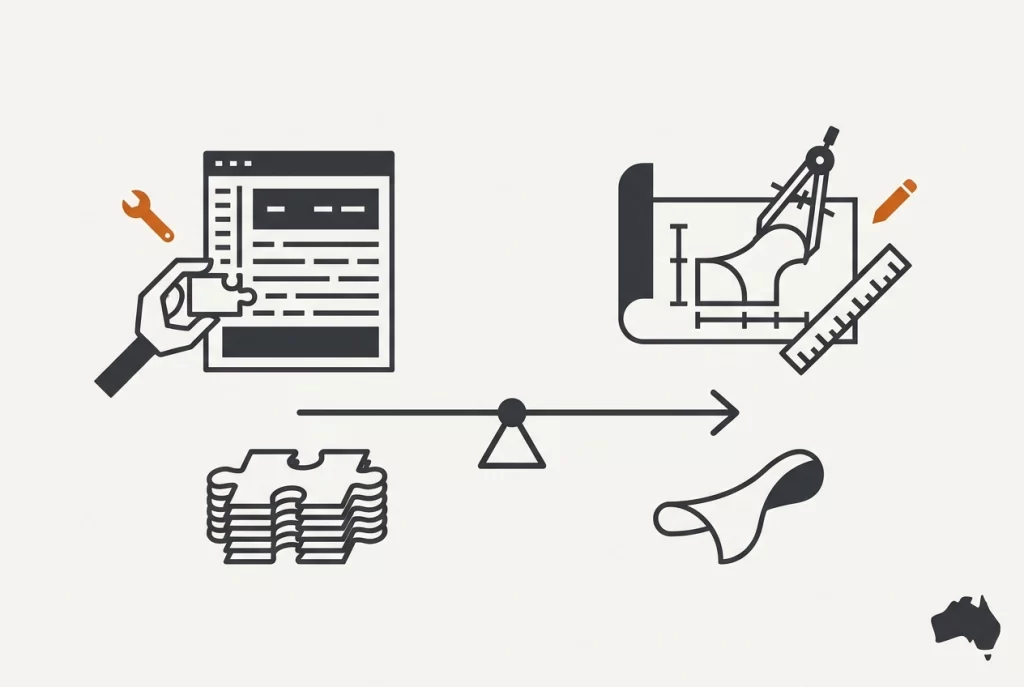
Time spent on Canva and captions isn’t free. If you’re a plumber, tradie, or café owner billing $80 to $150 an hour, every hour you spend scheduling Instagram posts carries that same dollar value. It just doesn’t show up as a line item, so it feels invisible.
There’s a concept called opportunity cost that applies directly here. Every hour spent on social media is an hour not spent on billable work, serving customers, or growing your business. That’s the calculation most owners never run.
This piece isn’t here to push you toward outsourcing. It’s here to help you work out what makes sense for your situation, with clear numbers and honest trade-offs.
Local SMBs tend to fall into one of two traps: spending hours each week on social media with little to show for it, or assuming a managed service is out of reach without checking what it actually costs. Before sorting out which social platforms are even worth your time as a local Australian business, it helps to get clear on whether you should be running it at all.
What Managing Social Media Yourself Actually Looks Like
So what does it actually involve, day to day?
Managing social media for your small business is a lot more than firing off a post when you remember. A realistic week includes planning what to create, designing graphics, writing captions, scheduling posts, replying to comments and DMs, and checking what’s actually getting traction. Each piece takes time, and they all add up.
For a consistent, results-oriented presence across even one or two platforms, the time commitment is material, planning, designing, writing, scheduling, engaging, and reviewing analytics all add up across the week.
Then there are the tools. A basic DIY setup typically means a scheduling platform, a graphic design tool like Canva Pro, and possibly a stock image subscription. Add in the cost of a scheduling platform, design tool, and possibly a stock image subscription, and tool spend is a real line item even before content creation begins.
The biggest DIY pitfall, though, is inconsistency. Life gets busy, and social media is the first thing dropped. Research suggests it takes five to seven impressions for people to remember a brand, so going quiet for two weeks undoes real ground. Algorithms reward regularity too, not just quality.
Finally, the platforms keep moving. Reels, Stories, carousels, algorithm shifts, and now AI content considerations mean the learning curve doesn’t flatten out. Staying current is its own ongoing time commitment, separate from the actual creating and posting.
The Hidden Cost of Doing It Yourself
So you’ve done the maths on the time involved. Now here’s the part most owners skip: what that time is actually costing you.
Run your own numbers: multiply your weekly hours by what your time is genuinely worth to your business, and the figure is usually larger than expected.
But the dollar figure is only part of it. There’s also the mental load that rarely gets counted: the low-level stress of knowing it needs doing, the mid-job distraction of trying to think up caption ideas, the context-switching between running your business and suddenly being a content creator. That cognitive drain is real, and it adds up across the week.
When social media gets squeezed in between everything else, the quality usually shows. Rushed posts, inconsistent visuals, content that doesn’t quite land. That kind of output can quietly work against your brand rather than build it.
That said, this calculation isn’t the same for everyone. If you’re early-stage with more time than budget, that equation looks completely different, and DIY can still be the right call. Both answers are valid. The point is to make the calculation honestly, not to default to “it’s basically free” when it isn’t.
What You Actually Get With a Managed Social Media Service
So what do you actually get when you hand this over to someone else?
At the SMB level, a managed social media service typically covers the core workload: a content calendar, graphic creation, caption writing, scheduling, and a basic monthly performance report. That’s the standard package from a decent provider.
The part that separates a good local-focused service from a generic one is context. Your content should reflect your suburb, your community, and the way your customers actually talk, not just polished branded posts that could belong to any business anywhere in Australia.
Before a quality provider posts a single thing, they should spend time getting to know your brand voice, your audience, and your history. What’s landed well before? What flopped? A proper onboarding process is a good sign; jumping straight into posting is not.
Transparency is non-negotiable. You should know exactly how many posts per week, which platforms, what’s included, and what the reporting covers. If a provider is vague about deliverables upfront, that’s worth noting.
One thing that often gets overlooked: a managed service stays across platform changes, algorithm shifts, and emerging content formats so you don’t have to. That ongoing awareness is baked into what you’re paying for, and it has real value for any small business without a dedicated marketing team.
What Does Social Media Management for Small Business Actually Cost?
So what does all of this actually cost in practice?
For most Australian SMBs, managed social media pricing varies widely depending on scope, platforms covered, posting frequency, and whether paid advertising management is included. Asking providers for itemised quotes is the only reliable way to compare.
The pricing you may have heard quoted for large-brand agency campaigns is built for corporate clients with corporate budgets, it is not the benchmark for a local small business. SMB-focused providers operate at a very different price point, and comparing the two is like pricing a tradie job against a commercial construction quote.
Pricing transparency and deliverable clarity go hand in hand, both are covered in the partner-selection checklist below.
Some providers also offer tiered options, starting with content creation only, then scaling up to full management that includes community engagement and ads. That’s a practical way to start small, see what works, and grow from there.
DIY vs. Managed: A Side-by-Side Look
Now that you have a sense of what’s included and what it costs, here’s how the two options actually stack up.
DIY
- ✅ Full control over your voice and timing
- ✅ No monthly retainer commitment
- ✅ Works well if you enjoy it and have consistent time available
- ❌ High time cost, consistent management requires more hours per week than most owners expect
- ❌ Steep learning curve across platforms and content formats
- ❌ Inconsistency is almost guaranteed during busy periods
- ❌ Quality suffers when content gets rushed between jobs
Managed service
- ✅ Consistent, professional output every week
- ✅ Frees your time for billable or high-value work
- ✅ Strategy and reporting included, not just posting
- ❌ Requires clear communication and trust in your provider
- ❌ Onboarding takes a little time upfront to get right
- ❌ Monthly cost that needs a place in your budget
The real comparison isn’t just dollars versus dollars. That longer-term picture, what consistent, quality social media compounds into for your local visibility, is worth factoring in alongside the weekly time cost. Sporadic DIY posts rarely build momentum. A steady, well-executed presence compounds over time, bringing in more local eyes and more enquiries.
Signs It’s Time to Stop Doing It Yourself
The comparison above gives you the framework. Here’s how to know when the scales have genuinely tipped.
- You’ve gone silent more than once. If your last post was two or three weeks ago, and this isn’t the first time, that’s not a busy patch. That’s a pattern.
- Consistent posting with no meaningful engagement, enquiries, or follower growth after an extended period of genuine effort is a signal the approach needs more than you can give it alone.
- You dread doing it. That feeling shows up in the work. Rushed captions, recycled content, and skipped weeks are all symptoms of a task that’s fallen to the bottom of your list.
- Your time is genuinely worth more elsewhere, if opportunity cost is already a pressure point in your business, content creation is a hard hours allocation to justify.
- Your competitors are showing up and you’re not. When similar local businesses are posting polished, consistent content and you’re struggling to keep up, the gap starts affecting how customers perceive you before they’ve even made contact.
Any one of these on its own might be manageable. If two or more sound familiar, it’s worth taking seriously.
When Doing It Yourself Still Makes Sense
But it’s not always time to hand it over. DIY still makes real sense in the right circumstances.
If you’re in early startup mode with more budget constraints than time constraints, sweat equity on social media is a legitimate strategy. Put the hours in now while cash is tight, and reassess as the business grows.
If you genuinely enjoy creating content and have a natural feel for how your customers think and talk, that often produces something a third party can’t easily replicate. Authentic, personality-driven posts from the actual business owner connect differently, and your audience can usually tell.
Some businesses are also just built for spontaneous posting. A tradie showing a before-and-after job, a café sharing today’s special, a boutique unpacking new stock, these in-the-moment posts are part of the appeal. That kind of content is hard to hand off without losing something.
If you only need a light presence, say one platform and two or three posts a week, and you can genuinely stay consistent without it derailing your week, there’s no pressure to outsource.
And if you’ve recently put real effort into learning how to do this properly and you’re starting to see early signs of traction, it may be worth continuing a little longer before changing your approach.
What to Look for in an SMB Social Media Partner
If you’ve decided it’s time to bring someone in, choosing the right provider matters just as much as the decision itself.
Start with this: look for someone who works specifically with small or local businesses. A provider built for corporate clients will treat you like a scaled-down version of one, and that usually means generic content, inflexible packages, and reporting that doesn’t reflect how your business actually works.
As noted above, transparency around deliverables is the baseline, beyond that, dig into how the provider handles your brand voice. Do they spend time understanding how you talk to your customers, or do they drop you into a template and move on? Your local audience can tell the difference.
A good social media partner for a small business should also understand your local market context. Engagement in your community, references to local events or landmarks, and content that speaks to your specific customers matters far more than chasing follower counts.
That’s exactly how Epik Monkey approaches it: practical content built around local Australian SMBs, no corporate pricing, no jargon, just social media that actually sounds like your business.
So, What’s the Right Call for Your Business?
Start by being honest with yourself about the numbers. How many hours a week are you actually spending on social media, and what is that time worth to your business? That single calculation often makes the decision obvious.
If DIY is working, keep going. Seriously. There is no reason to outsource something that is delivering results and fits comfortably into your week.
But if you are spending hours with little to show for it, or avoiding social media altogether because it feels like too much, it is worth finding out what a managed service at SMB pricing actually costs. You might be surprised how close it sits to what your time is already worth.
The goal here is not to spend more on marketing. It is to make sure whatever you are already spending, in time or money, is actually doing something useful for your business.
If you are unsure where you sit, a quick conversation with a local-focused provider like Epik Monkey costs nothing. No hard sell, no jargon, just a straightforward chat about what is realistic for your situation and whether it makes sense to explore further. Sometimes that clarity alone is worth it.
Conclusion
The decision between DIY and managed social media comes down to four honest truths: your time has real dollar value, inconsistent social media costs you more than you think, professional management does not have to mean corporate pricing, and the right choice depends entirely on your specific situation.
If social media is working for you, own it. If it is draining your week without delivering results, that is worth addressing.
The smartest move right now is simple: calculate what your current social media hours are actually costing your business. That number will tell you almost everything you need to know.
Ready to see what managed social media could look like for your business? Start a no-pressure conversation with Epik Monkey today. Local focus, real pricing, and content that actually sounds like you. That is the only way social media should work for a small business.