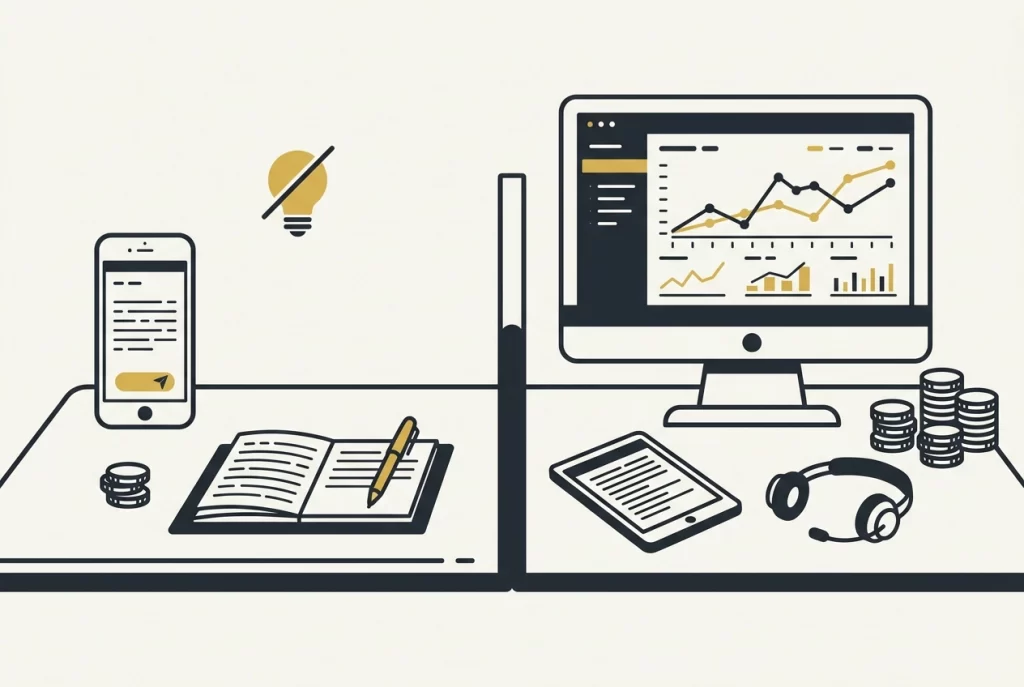
Someone tells you to “just build it yourself” and suddenly you’re three hours deep into a Canva-style drag-and-drop editor, wondering why your logo looks slightly off and whether anyone will actually trust a website you built on a free plan. Sound familiar?
The conversation around choosing a website builder for small business in Australia tends to skip the parts that actually matter. Most guides compare price tags and call it a day. But the real decision is messier and more interesting than that. It comes down to three things: how much of your own time you’re willing to spend, how professional your site needs to look to win over customers, and who actually controls the thing once it’s live.
This post works through all of it honestly. You’ll find out what DIY platforms genuinely do well and where they quietly let you down, what you’re really buying when you hire a web designer, how your website affects the way customers size you up before making contact, and a practical framework to help you figure out which path actually suits your situation. No cheerleading for either side. Just the trade-offs laid out clearly.
It’s Not Really About the Price Tag
Most “DIY vs professional” guides open with a price comparison. DIY platform: a few hundred dollars a year. Web designer: a few thousand upfront. Case closed, right?
Not quite. Those guides are comparing the wrong things.
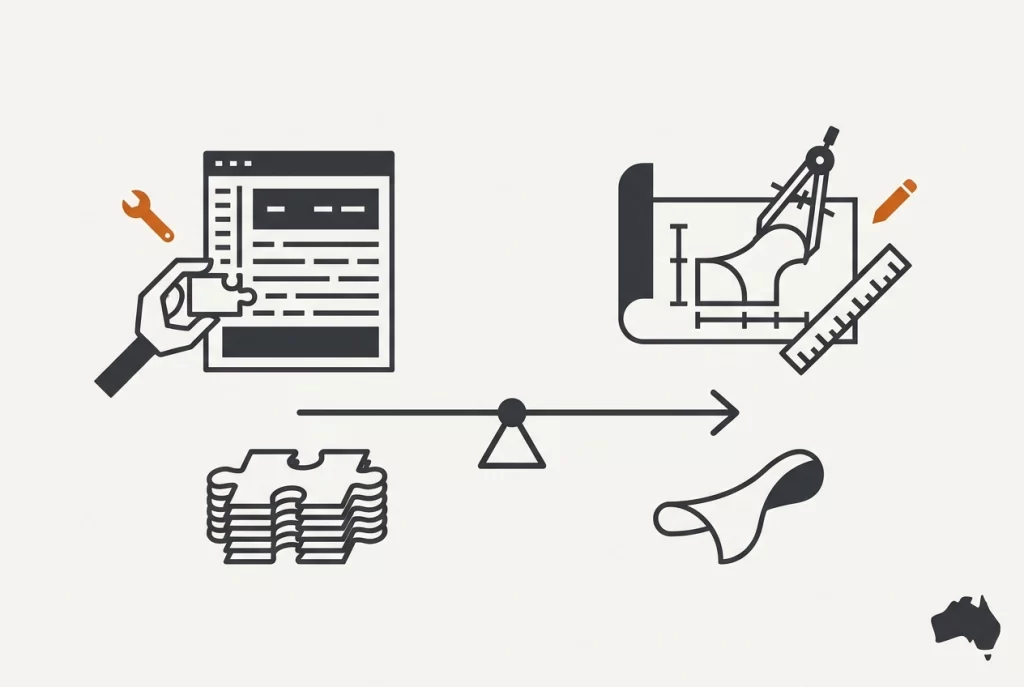
The real decision involves three things that rarely appear in any comparison: how much of your time it will actually consume, how your site looks to customers who’ve never met you, and who controls the thing once it’s live. Miss any one of those, and the cheaper-looking option can quietly cost you more.
Neither path is universally right. A small business website is not a one-size-fits-all decision, and anyone who tells you otherwise is probably selling you something.
The honest question sitting underneath all of this is simple: what is an hour of your time actually worth, and how many hours are you willing to spend?
That question hits harder for Australian small business owners than it might elsewhere. Australia has around 2.5 million small businesses, and most are run by the owner with little or no staff to delegate to. There’s no marketing coordinator to hand this off to, no spare staff member with a slow afternoon. When you spend a Saturday building your website, that’s a Saturday you’re not quoting jobs, serving customers, or simply switching off.
That time trade-off is what the rest of this guide is built around.
The Hidden Time Cost of Going DIY
So let’s talk about where that time actually goes.
Building a DIY small business website involves more distinct tasks than most people realise: browsing and selecting a template, writing every page, sourcing images, setting up each page, and testing on mobile. Each step takes longer than expected, especially the first time.
The part that surprises people most is the copywriting. Writing a homepage, about page, services page, and contact section means finding the right words to explain your business clearly to a stranger. That alone can take longer than all the clicking-and-dragging combined. Most platform ads show someone building a beautiful site in minutes. They don’t show the two hours staring at a blank “About Us” box.
Then there’s what happens after launch. Platform updates occasionally break layouts. A button stops working. You want to add a new service. Each of these becomes another evening.
A realistic DIY build takes multiple weekends, not a single afternoon. The exact hours depend on how complex your site is and how comfortable you are with the tools, but it is rarely quick.
If you’re wondering whether that time could go toward paid advertising instead, it’s worth reading what Google Ads actually costs and returns for local businesses before making any decisions.
What DIY Website Builders Actually Get Right (and Where They Fall Short)
So with the time cost covered, it’s worth looking honestly at what these platforms actually deliver, and where they run out of road.
The genuine strengths are real. DIY website builders have a low upfront cost (often free to start), you are not waiting on anyone else’s schedule, and once your site is live, you can jump in and fix a price, swap a photo, or update your hours without calling anyone. For day-to-day control, that flexibility is genuinely valuable.
But platform lock-in is a problem most people discover too late. When you build on a proprietary website builder, your content, your design, and your structure all live inside that platform’s ecosystem. If you want to leave, because the pricing goes up, the features don’t grow with you, or you want a more professional result down the track, you typically cannot export your site. You start again from scratch. That is not a scare tactic; it is simply how most of these platforms work.
The template ceiling is another quiet limitation. At the free or lower-cost tier, most small business website builders pull from the same pool of templates. In a competitive local market, looking nearly identical to the tradie or salon two suburbs over does not help you stand out.
SEO tools have improved, but they still require action. Builders now include basic SEO settings, but the settings only work if you understand what to fill in and why. Most owners leave them at default.
That said, if you just need a single-page contact site or a basic service listing, a DIY builder is a perfectly sensible starting point. There is no shame in it.
What Hiring a Web Designer Actually Gets You (and the Risks to Watch For)
Going the professional route gives you something a template can’t: a site shaped around your actual customers, not a generic layout you’ve squeezed your business into. A good designer asks who you’re trying to reach, structures pages around that, and helps you say the right things in the right order. The result looks credible from day one, which matters because two in five Australian consumers won’t buy from a business with no dedicated website, and a site that looks unpolished can create hesitation before a potential customer ever picks up the phone.
The catch is that hiring badly is a real risk.
Common problems with bad hires include:
- Vague briefs that result in a site that looks nothing like what you expected
- Missed deadlines that drag a two-week project into four months
- Sites built on systems only the designer can access, leaving you dependent on them for every future change
- Designers who go quiet after launch, taking the logins with them
Before you sign anything, ask three practical questions: Can I see examples of local small business work you’ve done? Who owns the domain and hosting once the project is finished? What platform is the site built on, and can I make basic edits myself?
The CMS (content management system, the tool you’d use to update your site) matters more than most people realise.
On cost: the range in Australian web design is enormous. The cheapest quote carries the highest risk of the problems listed above. The most expensive agency isn’t necessarily the best fit for a local business either. Look for someone who works regularly with businesses your size, not someone for whom you’d be their smallest client.
How Your Website Affects What Customers Think of You
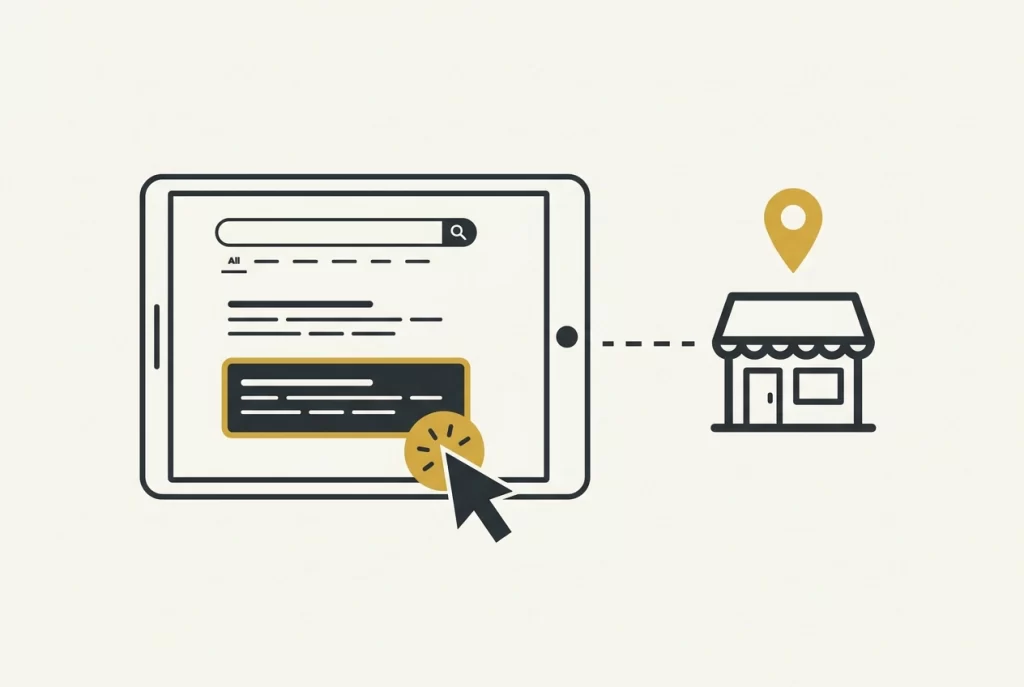
Whether you hired a designer or built it yourself, your website is doing a job you might not even realise. Before a potential customer calls you, sends an enquiry, or walks through your door, there’s a good chance they’ve already looked you up. That website is your first handshake, your shopfront, your service van parked out the front. It’s forming an impression before you’ve said a word.
The specific things customers notice first:
- A phone number and address that are easy to find
- A logo that looks intentional, not like a placeholder
- Real photos of your work, your team, or your space rather than obvious stock images
- Text that’s actually readable on a phone screen
These aren’t design flourishes. They’re the signals people use, often unconsciously, to decide whether you’re legitimate.
This stakes question gets amplified in certain industries. If someone is searching for a local tradie to rewire their home, a physio to treat a recurring injury, or a financial adviser to handle their super, the website has to clear a higher credibility bar. The potential customer is making a decision with real consequences, and a shaky-looking site gives them a reason to click away to the next option.
Here’s the honest part: a well-executed DIY site absolutely clears that bar. And a professionally built site with no real photos, buried contact details, and broken mobile formatting fails it. The tool is secondary. The outcome is what counts.
In most Australian suburbs and regional towns, your local competitors likely have basic or outdated sites. A clean, clear, mobile-friendly site gives you a genuine edge, regardless of how it was built.
Ongoing Control: Who Actually Owns Your Website?
Beyond how your site looks to customers, there’s a quieter question most business owners never think to ask: do you actually own your website?
There are three separate things to consider: your domain name, your hosting, and the website files themselves. With DIY platforms you’re essentially renting, a risk covered in the builder section above.
The same lock-in risk applies to professional builds when a designer keeps the only login, as noted earlier.
The middle ground works well for a lot of small businesses: a professionally designed site built on an accessible platform, where you can log in, update your hours, add a photo, or change a price without calling anyone. You get the quality of a professional build with the day-to-day independence of doing it yourself.
Before you sign anything with a web designer, ask one simple question: who controls the login after handover? If the answer is unclear, that’s worth sorting out before the work begins.
The Decision Framework: Which Path Fits Your Situation?
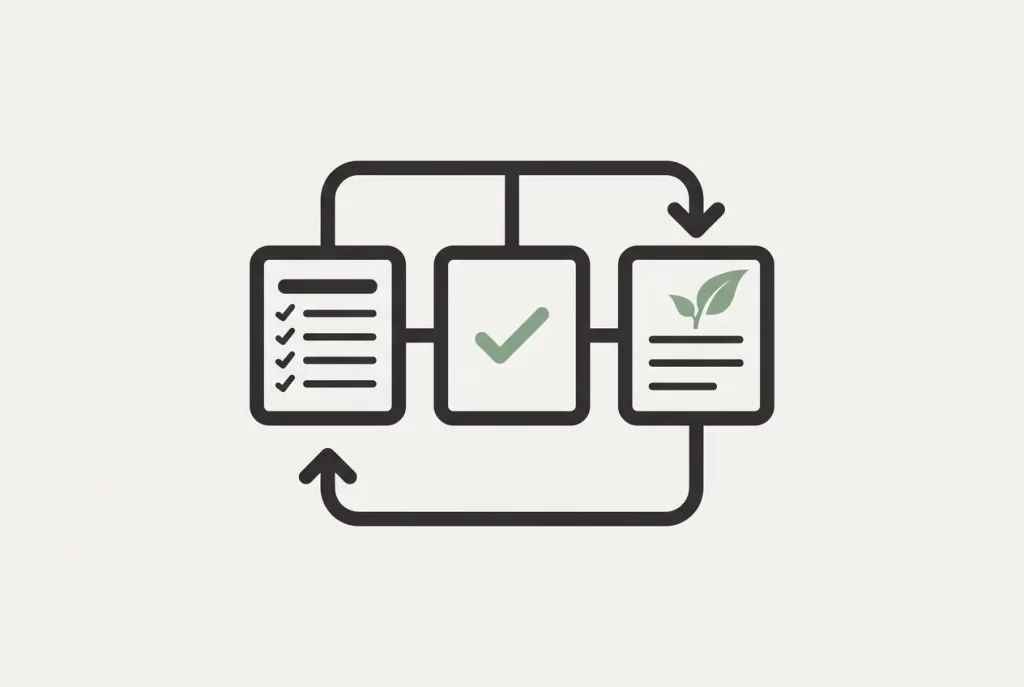
Which path fits your situation? Think of this as a quick self-assessment, not a verdict.
DIY tends to make sense if:
- You have more time than budget right now
- You’re comfortable picking up new tools as you go
- Your site needs are simple: a few pages, basic contact info, nothing complex
Professional design tends to make sense if:
- Your time is already stretched thin
- Customers form quick credibility judgements in your industry (trades, health, hospitality)
- You’re in a competitive local market where standing out from day one genuinely matters
Three common scenarios worth recognising:
A sole trader just starting out with limited cash and flexible hours? DIY is a reasonable first move. Get something live, learn what customers actually want, then revisit.
An established local service business ready to grow? Your time is worth more now, and a polished site that converts enquiries will likely pay for itself faster than another DIY build.
A retail or hospitality business chasing local search traffic? You’re competing directly with established players. A professionally built small business website gives you a real edge from launch.
Starting DIY and upgrading later is valid, just account for rebuild costs.
One honest reminder: the best website is the one that actually gets built and stays current. If DIY gets you live this month instead of next quarter, that matters. It’s also worth considering where else your energy could go, whether that’s figuring out which social platforms deserve your attention as a local Australian business or simply serving more customers.
A Third Option: Professional Results Without the Agency Price Tag
If neither path feels like a clean fit, there is a third option worth knowing about.
Epik Monkey sits in the space between a self-serve website builder and a large corporate agency. The focus is specifically on local Australian small businesses, owner-operated trades, service businesses, retailers, and the like, rather than the enterprise clients most big agencies are built around.
The practical difference matters. At a large agency, a local plumber or hair salon is often the smallest client on the books. The work still gets done, but the team’s real attention and experience tends to flow toward bigger accounts. Working with a team that spends all its time with businesses your size means the conversations start from a different place.
The approach is no-jargon and no lock-in. You come away with a site you actually understand and the ability to manage it day-to-day, without the jargon or the dependency.
This is one option, not the only answer. If DIY genuinely suits your situation, that is a perfectly good choice. If you are still weighing it up and want to talk through what would actually work for your specific business, a no-pressure conversation is easy enough to start.
No hard sell, no jargon, just a straight conversation about what makes sense for where you are right now.
The Honest Takeaway
These three trade-offs, time, trust signals, and control, don’t resolve themselves.
DIY costs less upfront but the full picture, platform fees over time, hours spent building and fixing, and the potential cost of starting fresh on a new platform, is rarely as cheap as it first appears. Professional design carries a higher starting cost, but many businesses find it pays for itself through better enquiry conversion.
Neither option is automatically the right one. DIY has real strengths, and hiring a professional carries real risks if you don’t ask the right questions first. The mistake isn’t choosing one path over the other; it’s choosing by default because one option felt less scary.
So here’s one practical thing to do before you decide anything: grab a pen and write down how many hours per month you can genuinely put into your website. Not your best-case number. Your real number, accounting for the week you’re flat out, the weekend you’re on a job, and everything else on your plate.
That number is your starting point. If it’s generous, DIY might suit you well. If it’s thin, your time is probably worth more elsewhere.
Conclusion
The DIY versus professional design debate rarely has one correct answer, but it always has a right answer for your specific situation. What matters most is being honest about your time, your budget across the full term, and how much trust your website needs to build with customers before they pick up the phone.
A cheap website that costs you hours every month is not actually cheap. A professionally built site with no ongoing support is not actually hands-off. The best choice is the one made with clear eyes, not the one that felt easiest to default to.
Start with that honest hours audit. Add up the real platform costs over two years. Then decide.
If you want a straight conversation about what would actually suit your business, reach out. No pressure, no pitch. Just a practical discussion that helps you move forward with confidence.